
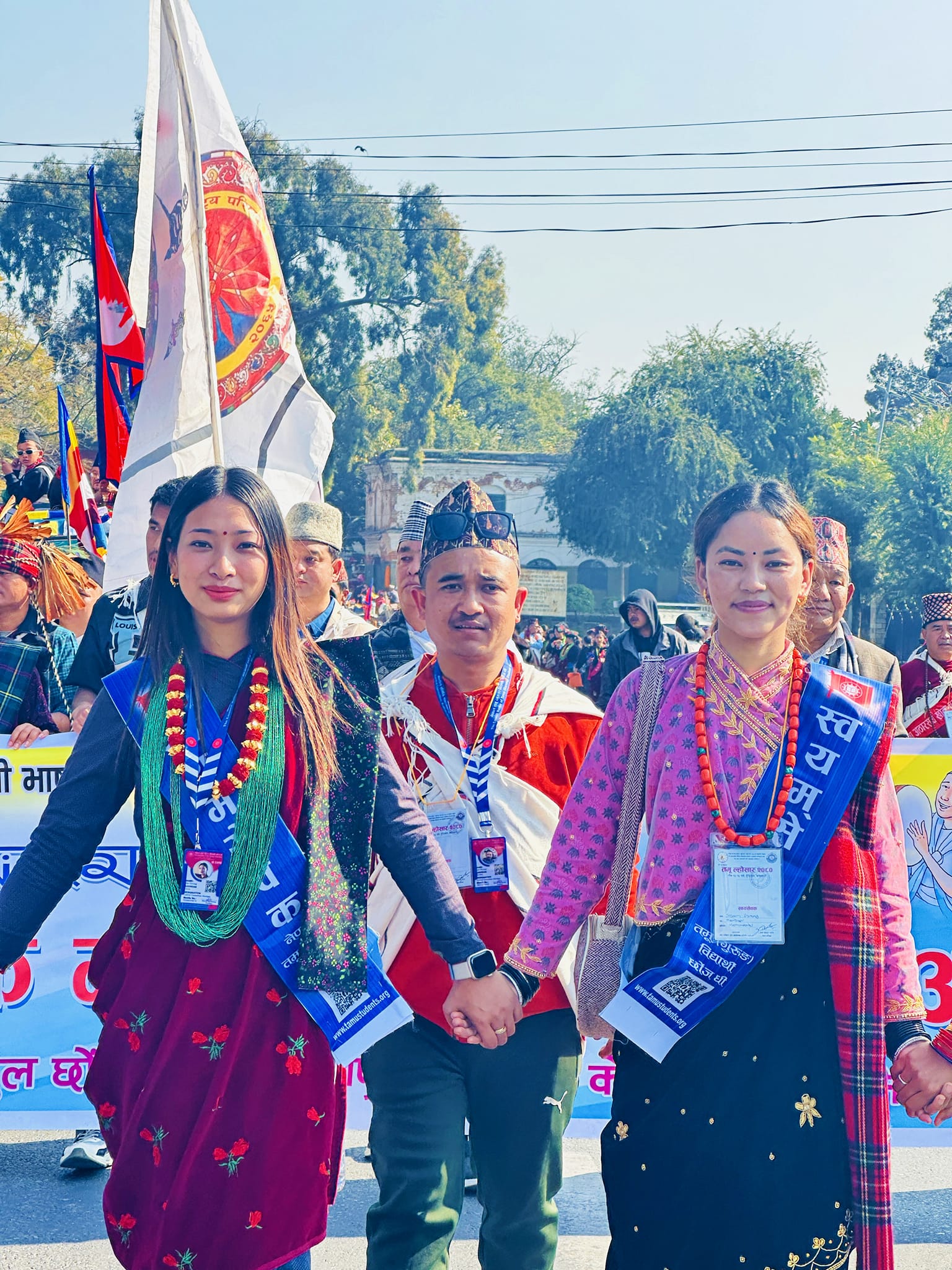
Nepal is home to diverse ethnic groups, each with its own unique traditions, customs, and cultural identity. Among them, the Gurung (Tamu) community stands out as one of the most prominent indigenous groups, known for their bravery, vibrant culture, and deep connection to the Himalayan landscape.
Origins and Settlement
The Gurungs are believed to have migrated centuries ago from Tibet and Mongolia into the Himalayan foothills of central Nepal. Today, they primarily live in the districts of Lamjung, Kaski, Gorkha, Tanahun, and Manang, with smaller populations spread across other regions. Their settlements are often picturesque hillside villages overlooking the Annapurna and Manaslu ranges.
Language and Identity
The Gurungs have their own language, Tamu Kyi, which belongs to the Tibeto-Burman family. While many Gurungs also speak Nepali, their language is an essential part of their cultural identity. The term “Tamu” is often used by Gurungs themselves to describe their community.
In the past, almost everyone spoke the Gurung language and understood one another, but there was no script. Now, with the development of a script, the Gurung community has the opportunity to learn it. However, with modernization and the migration of Gurungs to cities and abroad, their language is at risk of disappearing.
Culture and Traditions
Festivals and Rituals
-
Lhosar (Tamu Lhosar): The biggest festival of the Gurungs, celebrated on Poush 15 Lhosar (December 30), marks the New Year according to their lunar calendar. It is observed with traditional dances, feasts, and community gatherings. On the 15th of Poush, there is a tradition of inviting relatives and daughters/sisters for a feast. Those born on this date change their zodiac sign, which is called Lho. According to the Lho, a person’s age also progresses.
-
Ghantu Dance: A unique ritual dance performed by young Gurung women during the spring season. It has spiritual significance and tells ancient stories of kings and deities. On the day of Baisakh Purnima(April) the Ghantu dance begins, and it is concluded after 2–3 days. After that, a grand feast is traditionally organized within 1–2 months. Guests from far and wide come and participate in the feast. During this time, there is a custom of dancing to the beats of the khaijadi and jhyali instruments, which is called Chutka. When the guests return home, they offer donations or money as they wish before departing.
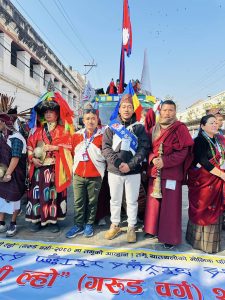
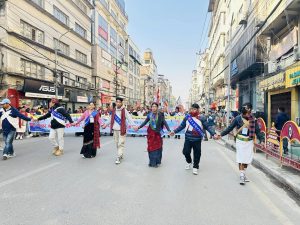
Lhosar festival
Dress and Ornaments
Traditional Gurung attire is distinct and colorful. Women often wear gunyo-cholo (traditional blouse and skirt) with ornaments like necklaces made of silver and beads, while men wear bhoto (vest) and kachhad (loincloth), along with a cap called topi.
The traditional attire of the Gurung community is now being worn more widely than in the past. In earlier times, perhaps due to poverty, not everyone could afford to buy such clothing. Today, however, under the slogan of preserving ethnic identity, there is a growing movement to protect religion, culture, language, and traditional dress.
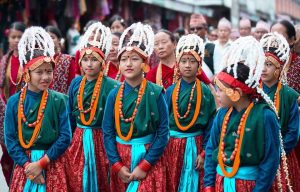
Ghatu dance
Music and Dance
The Gurungs are known for their lively Rodhi Ghar culture, a traditional communal gathering place where youths sing, dance, and socialize. Rodhi songs and dances often reflect themes of love, daily life, and social harmony.
In the past, it was customary for young men and women to meet at the Rodhi Ghar and sing songs together. Love and relationships would blossom there, and sometimes couples would even elope and get married from those gatherings. Nowadays, this tradition has disappeared in many places because in modern times people feel shy or hesitant to participate in Rodhi gatherings.
The Gurungs and Military Heritage
The Gurungs are internationally renowned as brave warriors, forming a significant part of the legendary Gurkha regiments of the British and Indian armies. Their reputation for loyalty, courage, and discipline has brought global recognition to this indigenous group.
Modern Gurung Community
While modernization and migration have influenced Gurung lifestyles, many traditions remain alive in rural villages. Gurung people are also prominent in business, tourism, and education sectors in Nepal and abroad. Their culture continues to attract travelers, anthropologists, and researchers interested in Nepal’s rich diversity.
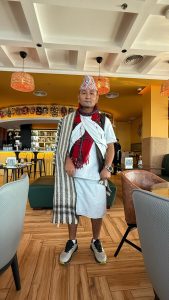
Gurung dress
Why Learn About the Gurungs?
The Gurung community represents a vital part of Nepal’s cultural mosaic. Their traditions, dances, and festivals not only preserve centuries-old heritage but also highlight the resilience and adaptability of indigenous communities in the Himalayas.
Religion
In Nepal today, speaking about religion requires some caution, as people often say that discussing it can provoke social tension. However, when presenting the Gurung community to the world, it seems relevant to talk about religion.
Traditionally, the Gurungs were seen as following Hinduism. But after the Maoist armed movement, many began to identify themselves as Buddhists. The Maoist movement brought freedom of speech, giving everyone the ability to voice their identity—Dalits could speak, Nepalis from the Madhesh could speak, and so could others who were once marginalized.
With time, many Gurungs have also converted to Christianity. Today, the community includes followers of Hinduism, Buddhism, and Christianity.
Invitation
If you want to experience the culture and festivals of the Gurung people of Nepal, you are warmly invited to join Lhosar. This festival falls on Poush 15 (December 30) each year. During Lhosar, people of all ages—children, youths, and elders—wear their traditional dress and visit monasteries for prayers. Colorful processions light up the streets, creating a joyful and festive atmosphere. The biggest celebrations take place in Kathmandu and Pokhara, with Kathmandu’s Ratna Park hosting a grand cultural program.
Everyone is invited to join these festivals and experience the rich traditions of the Gurung community!