

Wars are often watched from afar. On television screens, conflicts appear as military strategies, political statements, and explosions in distant cities. But for millions of families around the world, war is not just a geopolitical event—it is a personal tragedy.
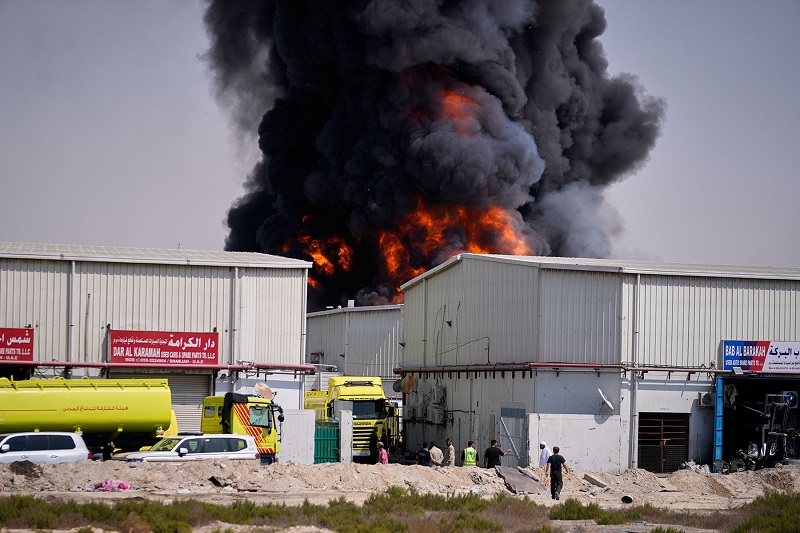
The recent drone attack in Abu Dhabi that killed 29-year-old Nepali migrant worker Dipesh Shrestha is a painful reminder of the human cost of global conflicts.
A Young Life Lost
Dipesh Shrestha was originally from Bhimsen Thapa Rural Municipality in Gorkha, Nepal. Like thousands of young Nepalis, he left his homeland to seek better opportunities abroad. Three years ago, he moved to the United Arab Emirates to work as a security guard.
Before leaving Nepal, Dipesh was studying to become an overseer in Kathmandu. But economic realities pushed him to pursue foreign employment. He hoped to support his family and build a secure future.
Tragically, that dream ended during a drone attack at Zayed International Airport in Abu Dhabi, where he was working.
According to reports, Dipesh was trying to help neutralize a drone during the attack when he was killed.
Just two days before the incident, Dipesh had posted on Facebook about the rising tensions in the Middle East. As someone living in Abu Dhabi, he shared his perspective on the situation.
“After watching the news, my attention was drawn,” he wrote. “As a resident of Abu Dhabi, I know the situation here. Some reports have been exaggerated.”
It would become his final post.

A Family’s Dream Shattered
Dipesh was the only son of his father, Chambahadur Shrestha. His family had high hopes for his future.
Last October, he returned to Nepal to celebrate Dashain and Tihar with his family. During that visit, he spoke about his plans to get married during his next vacation home.
Instead of preparing for a wedding, his family is now preparing for his funeral.
His father recalls their final conversation with deep pain.
“We spoke on Saturday evening,” Chambahadur said. “After that, there was no contact.”
When the news of Dipesh’s death reached his village in Gorkha, the entire community fell into mourning.
The Silent Risk for Migrant Workers
Dipesh was not a soldier or a political figure. He was one of millions of migrant workers who live and work in the Gulf region.
Workers like him build cities, operate services, guard facilities, and maintain infrastructure that supports the economies of these countries.
However, when conflicts erupt in the Middle East, migrant workers often face serious risks.
These risks include:
-
Physical danger: Many migrant workers work in airports, oil facilities, and critical infrastructure—locations that may become targets during attacks.
-
Economic uncertainty: Conflicts can disrupt businesses and cause job losses for foreign workers.
-
Mental stress: Workers and their families constantly worry about safety during times of conflict.
-
Remittance disruption: Countries like Nepal depend heavily on money sent home by migrant workers.
According to estimates, millions of South Asian workers currently live in the Gulf countries, including the UAE, Saudi Arabia, Qatar, and Kuwait.
For these workers, regional instability can quickly become a life-threatening reality.
The Human Cost of Geopolitics
When global conflicts dominate international headlines, discussions often focus on military power, diplomatic tensions, and oil markets.
But behind these headlines are ordinary people like Dipesh Shrestha.
They leave their homes to support their families and contribute to the economies of both their host countries and their homeland.
Their sacrifices are rarely recognized.
Dipesh’s death is a tragic reminder that the consequences of war reach far beyond battlefields. They affect families, communities, and entire nations that rely on migrant workers.
Remembering Dipesh
Dipesh’s relatives describe him as a kind and hardworking young man who always helped others.
He had simple dreams—to support his parents, build a home, and start a family.
Instead, his life ended far from home, in a conflict he had no role in.
The Nepali Embassy in Abu Dhabi has confirmed his death. But for his parents in Gorkha, the confirmation brings little comfort.
They have lost their only son.
As the world continues to watch the unfolding tensions in the Middle East, Dipesh Shrestha’s story reminds us that the true cost of war is measured not only in political outcomes, but in the shattered dreams of ordinary people.