
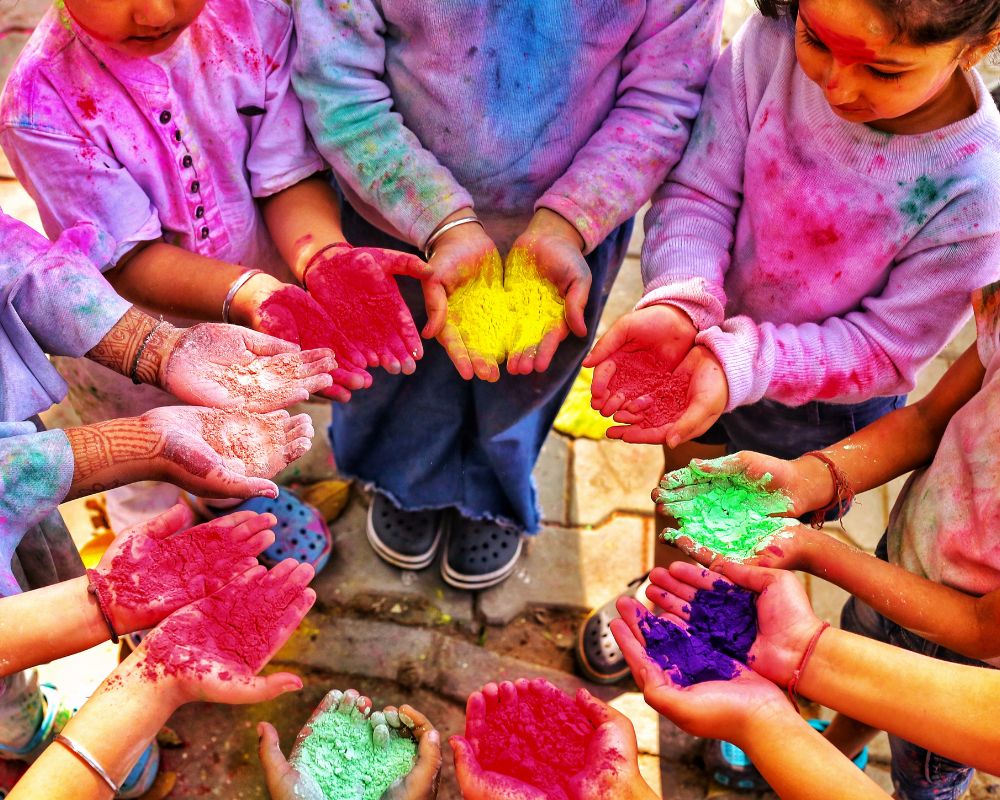
Holi, often referred to as the Festival of Colors, is one of South Asia’s most joyous and visually spectacular celebrations. Observed primarily in Nepal and India, Holi marks the arrival of spring and the triumph of good over evil, while promoting unity, love, and community bonding.
A Festival of Colors and Happiness
During Holi, people of all ages come together to throw vibrant colored powders and water, dance to traditional music, and share sweets and festive foods. The colorful celebrations create a sense of joy and equality, as social barriers dissolve and everyone participates in the fun, spreading smiles and laughter.
Spiritual and Cultural Significance
Holi has deep roots in Hindu mythology, particularly the story of Prahlad and Holika, symbolizing the victory of righteousness over evil. Beyond its spiritual meaning, Holi also serves as a cultural reminder of the importance of togetherness, forgiveness, and renewal, making it a celebration that transcends age, caste, and social differences.
Holi Around Nepal
In Nepal, Holi is celebrated with unique local traditions. Cities, towns, and villages erupt into colorful festivities, with people playing with water balloons, drums, and natural colors made from flowers and herbs. Tourists visiting during this time can witness the authentic energy and participate in cultural performances, street celebrations, and traditional feasts.
Why Tourists Love Holi
For travelers, Holi is not just a festival—it is an immersive cultural experience. The explosion of colors, music, and dance offers a chance to engage directly with local traditions, capture stunning photographs, and create unforgettable memories of joy, community, and cultural vibrancy.
Conclusion
Holi is more than just throwing colors; it is a celebration of unity, love, and the human spirit. Experiencing Holi in Nepal allows visitors to connect deeply with local culture, witness timeless traditions, and embrace the sheer joy of life.