
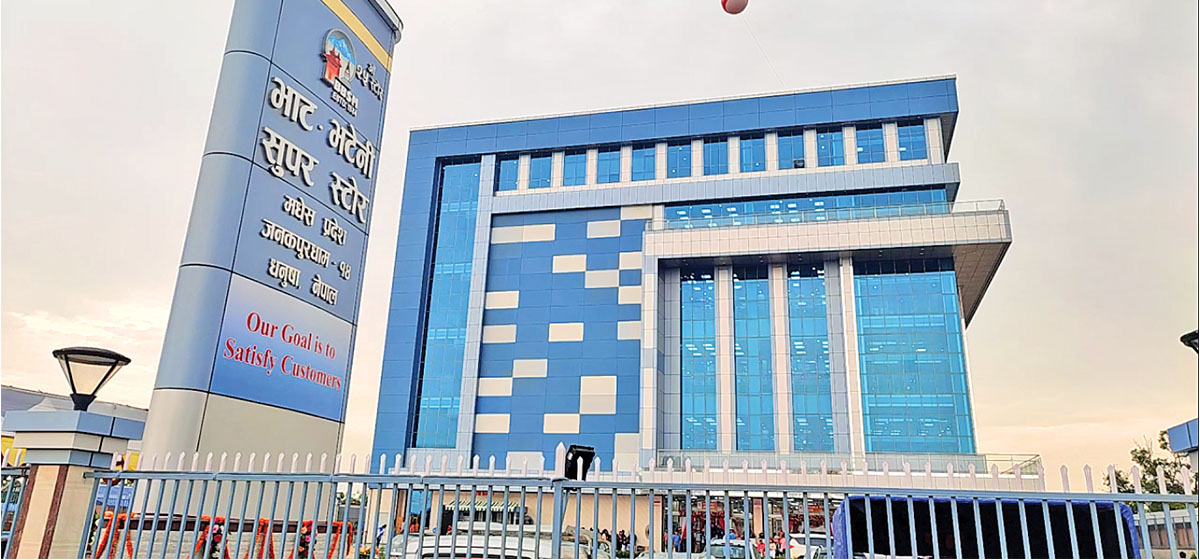
The Gen Z protests that erupted across Nepal on September 8–9, 2025, have left a trail of destruction affecting businesses, industries, and public infrastructure. The demonstrations escalated into violent clashes after the government’s actions led to the deaths of 19 young protesters in a single day, sparking nationwide outrage. The result: thousands of jobs lost and billions of Nepalese rupees in property damage.
Bhatbhateni Super Stores: From Dream to Devastation
About four decades ago, entrepreneur Min Bahadur Gurung founded the first Bhatbhateni Departmental Store in a small shutter in Naxal, Kathmandu. Over the next 41 years, Bhatbhateni grew into a nationwide chain of more than two dozen stores, employing thousands and setting a benchmark in Nepal’s retail and entrepreneurial sector.
Bhatbhateni became a symbol of investment, employment, and business innovation. Gurung’s vision was to expand the stores to all 77 districts of Nepal, creating jobs for the youth and contributing to the local economy.
However, during the recent Gen Z protests, Bhatbhateni stores became primary targets. According to CEO Panu Paudel, “The physical and financial damage is beyond imagination. All outlets were subjected to vandalism, looting, and arson, and as a result, at least 5,000 employees have lost their jobs.”
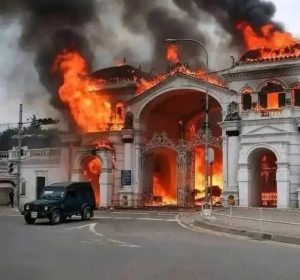
Out of the more than two dozen stores, over a dozen major outlets were completely destroyed, with fires in some locations continuing for more than a day. Looting and vandalism reduced stores to ashes, causing massive financial and employment losses.
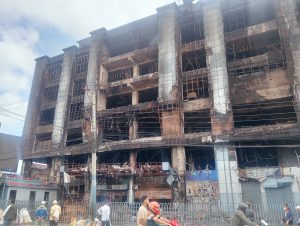
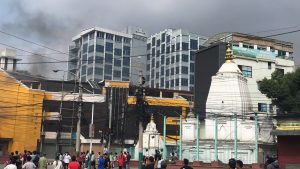
Bhatbhateni burning
Widespread Damage Across Nepal
The violent protests affected multiple sectors beyond Bhatbhateni:
Retail Businesses and Supermarkets
-
Local departmental stores and retail chains were looted and burned.
-
Hundreds of small shops and grocery stores in major cities suffered heavy losses.
-
Many business owners faced financial ruin due to destruction of inventory and premises.
Banks and Financial Institutions
-
Several branches of banks and financial institutions were vandalized.
-
Cash, documents, and sensitive records were destroyed or looted.
-
Service disruptions were reported across multiple regions, affecting daily banking operations.
The protesters vandalized and looted cashes Nepal Rastriya Banijya Bank and some are non Nepali according to video. This looters were not Gen Z members.
Private Industries and Factories
-
Warehouses and storage facilities were set on fire, destroying machinery, equipment, and stock.
-
Production was halted in several private industries due to infrastructure damage.
-
Some factories faced long-term operational setbacks.
Some private business sectors like warehouses, industries and house buildings are destroyed.
Transportation Sector
-
Public buses, taxis, motorcycles, and private vehicles were torched.
-
Daily commuting and supply chains were severely disrupted across affected areas.
Public Infrastructure
-
Government offices, local administration buildings, and police stations were vandalized.
-
Roadside stalls and public utilities suffered significant damage.
-
Total losses to public property, including major government buildings, run into billions of Nepalese rupees.
A major Government building in Sihadarbar, Supreme Court building, police department, stations and branches are totally destroyed. It will take a time to reconstruct buildings many years.
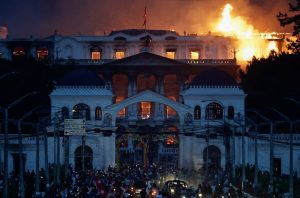
Kantipur Media Destroyed
Kantipur Media is one of Nepal’s largest companies. Some extremists, motivated by opportunism and resentment toward Kantipur, completely destroyed the Kantipur Media building. Currently, the Kantipur News portal is blocked. Many journalists, editors, and other staff—both directly and indirectly—have lost their jobs as a result.
The Human Cost: Job Losses
Beyond physical destruction, the protests have had a severe employment impact. Thousands of workers, particularly in retail and manufacturing, have lost their jobs due to store closures and industry shutdowns. For Bhatbhateni alone, estimates suggest 5,000–6,000 employees were directly affected. Many other small businesses also report layoffs or temporary suspensions.
Looking Ahead
The Gen Z protests highlight the vulnerability of Nepal’s businesses and workforce during periods of political unrest. While rebuilding infrastructure and restoring operations will require coordinated efforts between the government, business owners, and communities, the immediate priority remains supporting affected workers and stabilizing employment.
For entrepreneurs like Min Bahadur Gurung, the setback is devastating, but the resilience and determination that built a nationwide retail empire may serve as a blueprint for recovery.
Therefore, peace is a crucial factor for abundant employment worldwide. Without peace, businesses and industries collapse, and societies constantly face problems of unemployment.