
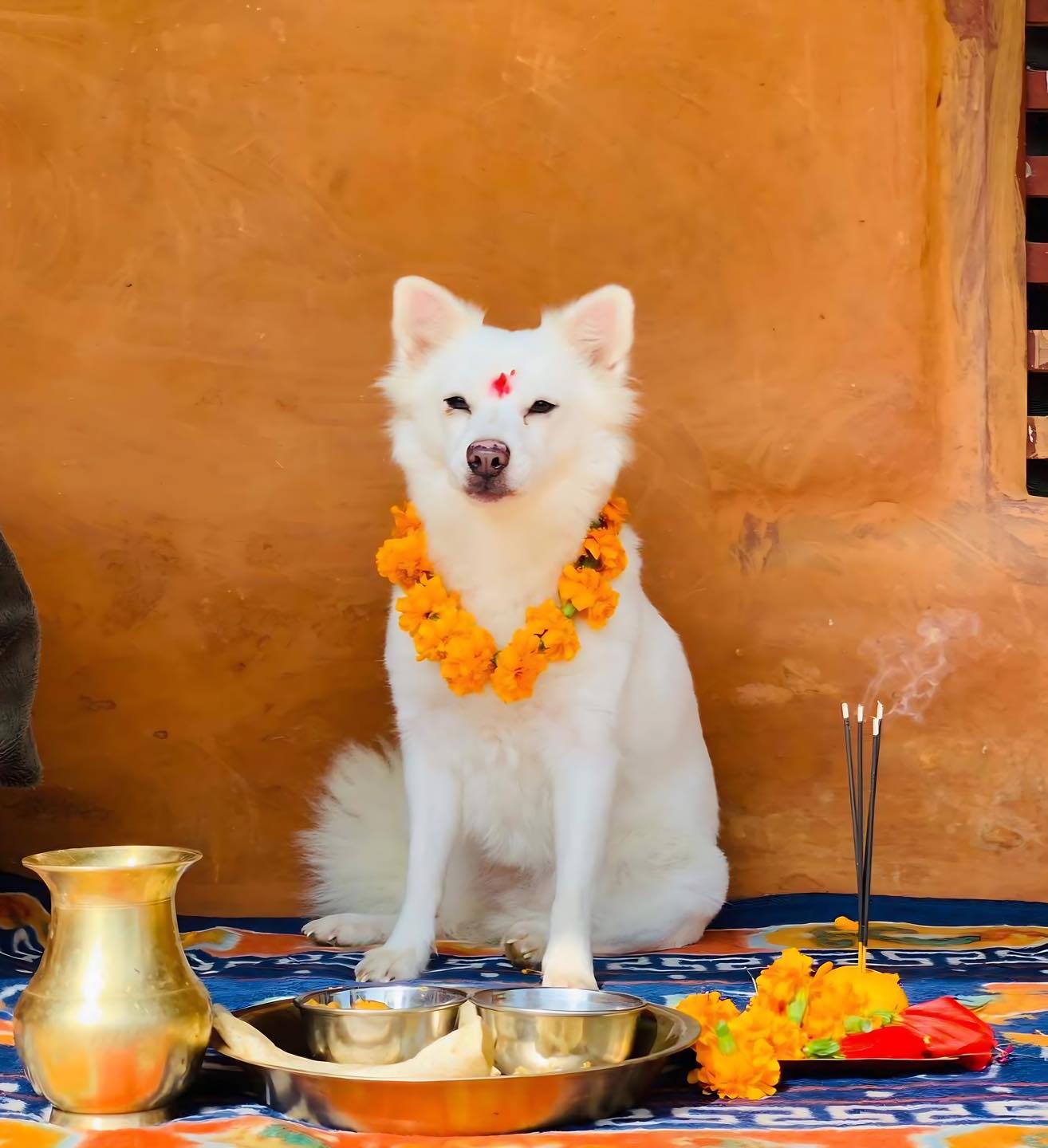
Today is Kukur tihar as well as laxmi puja. Tihar, also known as Deepawali or the Festival of Lights, is one of the most beloved celebrations in Nepal. It’s a festival that beautifully combines faith, gratitude, and joy — spreading light not just through lamps and candles, but through love for all beings. Today marks one of the most vibrant and heart-touching days of Tihar: Kukur Tihar during the day and Laxmi Puja in the evening. The air all across Nepal glows with devotion, fragrance, and a sense of togetherness.
Kukur Tihar: Honoring the Loyal Companion
As the sun rises on this special day, the streets of Nepal fill with the joyful sight of dogs adorned in marigold garlands and tika on their foreheads. Kukur Tihar, or the day dedicated to dogs, is one of the most unique traditions in the world — a day that celebrates the deep bond between humans and their faithful friends.
In Hindu belief, dogs are considered messengers of Yama, the god of death, and guardians of the afterlife. They symbolize loyalty, protection, and unconditional love. On this day, families across Nepal offer delicious food, meat, milk, eggs, and biscuits to both pet and stray dogs. They are honored with garlands of marigold (sayapatri) — a symbol of respect and purity — and their foreheads are marked with a red tika as a blessing.
The scene is heartwarming: children happily feeding stray dogs, families preparing special meals for their pets, and the streets alive with wagging tails and gentle eyes. Kukur Tihar reminds everyone of the simple truth — love and kindness towards all living beings are the true lights of humanity.

Laxmi Puja: Inviting Prosperity and Illumination
As evening descends, the entire nation transforms into a sea of lights. Laxmi Puja, the third day of Tihar, is dedicated to Goddess Laxmi, the deity of wealth, prosperity, and fortune. From the small rural homes to the bustling city rooftops, every corner is illuminated with oil lamps, candles, and colorful lights. The belief is that the goddess enters homes that are clean, bright, and welcoming.
Earlier in the day, families thoroughly clean and decorate their homes with rangoli designs, flowers, and rows of flickering diyos (oil lamps). When evening arrives, a sacred path is made from the courtyard to the prayer room — marked by footprints drawn with rice flour and red vermillion, symbolizing Goddess Laxmi’s entrance. Inside, the family gathers to worship, offering coins, flowers, sweets, fruits, and special homemade foods like sel roti and mithai.
The scent of incense fills the air, and the soft glow of the lamps dances across walls and windows. Prayers are offered for peace, prosperity, and happiness for the household and the nation.

Outside, the streets come alive with music and laughter as groups of youths sing and dance in the traditional Deusi Bhailo. This joyful exchange of songs and blessings symbolizes community harmony — as the young visit homes to perform, receiving sweets, fruits, and small donations in return. The melodies of Deusi and Bhailo echo late into the night, connecting generations through rhythm and tradition.
A Festival of Light, Gratitude, and Joy
Kukur Tihar and Laxmi Puja together represent the essence of Nepali culture — respect for all beings and reverence for divine prosperity. It’s a reminder that wealth is not only found in material riches, but also in compassion, gratitude, and togetherness.
As the dogs rest peacefully after their day of honor and the lamps continue to flicker across every rooftop, Nepal glows tonight — not just with lights, but with love, devotion, and the eternal hope for brighter days ahead.
Deusi bhailo