
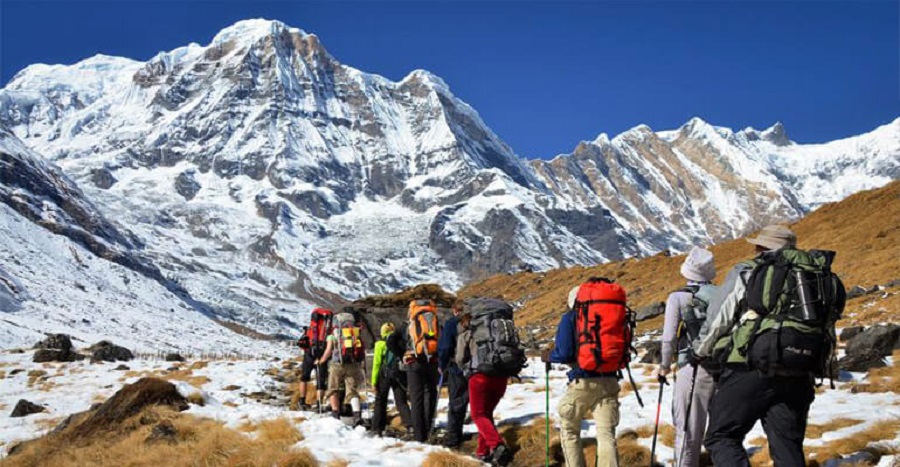
The Great Himalaya Trail (GHT) is one of the world’s longest, highest, and most adventurous trekking routes. Stretching across the mighty Himalayan range, this trail is not only Nepal’s pride but also a dream challenge for trekkers seeking unmatched alpine beauty and extreme adventure. While the complete trans-Himalayan route starts in Afghanistan and ends in the eastern Himalayas near Namche Barwa in India, the Nepal section remains the most famous—and the most spectacular—part of the entire trail.
In this blog, we explore why Nepal’s Great Himalaya Trail is considered one of the most remarkable trekking routes on earth, what makes it unique, and how trekkers can experience it even with limited time.
Unmatched Adventure on the World’s Highest Trekking Passes
The Great Himalaya Trail in Nepal is famous for its high-altitude challenges and extraordinary landscapes. Trekkers must cross numerous Himalayan passes—known as cols or passes—making it one of the world’s highest alpine trekking routes. Within Nepal alone, the GHT includes:
-
2 passes above 6,000 meters
-
18 passes above 5,000 meters
-
Around 40 passes above 4,000 meters
Among these, five passes are known to be extremely technical and highly demanding:
Sherpani Col, West Sherpani Col, Amphu Lapcha Pass, Tashi Lapcha Pass, and Tilman Pass.
These passes require not only physical fitness but also mountaineering skills, making the GHT a route suitable for trekkers seeking serious adventure. Because of this, only a small number of trekkers have ever completed the entire Nepal section in one continuous expedition.
Lower and Higher Routes: Options for Every Trekker
To make the Great Himalaya Trail accessible for both experienced adventurers and casual trekkers, the route is divided into Lower and Higher trails.
-
The Higher Route is the classic, challenging option that crosses high passes, glaciers, and remote landscapes.
-
The Lower Route offers a more culturally rich and less technical trekking experience, passing through villages, forests, and mid-hill regions.
For trekkers with limited time, the GHT is also divided into 10 regional sections, allowing them to trek only a part of the route—such as the eastern GHT, central GHT, or western GHT. This flexibility is ideal for travelers who want to experience the magic of the Himalayas without committing to several months of continuous trekking.
Completing the entire Nepal section of the Great Himalaya Trail takes a minimum of 150 days. Because modern life is busy and long leave is difficult, many trekkers choose to hike the GHT section by section, completing one part every year or every few months.
A Future Global Icon: The 4,500 km Trans-Himalayan Trail
If the Great Himalaya Trail were fully developed across all Himalayan regions—starting from Afghanistan, passing through Pakistan, Nepal, Bhutan, Tibet, and ending at Namche Barwa in India—it would stretch for an incredible 4,500 kilometers. Completing the entire trans-Himalayan trek would require around 185 to 190 days.
At present, no trekker is known to have completed the full trans-border route in one continuous journey. However, the Nepal section alone is enough to establish the GHT as one of the world’s greatest long-distance treks.
With proper coordination between Himalayan countries and tourism authorities, the Great Himalaya Trail has the potential to become:
-
The longest trekking route in the world
-
The highest alpine trail globally
-
A multi-country adventure tourism corridor
-
One of the most sought-after trekking challenges for global adventurers
The possibility remains alive, and if governments and tourism businesses collaborate, this dream project could become a reality in the future.
Best Time to Trek the GHT
The Higher Route of the Great Himalaya Trail is only trek-friendly from April to September, as winters bring heavy snowfall, icy trails, and extreme cold. Outside these months, many sections become too dangerous or completely inaccessible.
However, trekkers who choose the Lower Route can trek many sections year-round, making the GHT more flexible depending on weather, fitness, and travel plans.
Final Thoughts: A Lifetime Journey Across Nepal’s Mighty Himalayas
The Great Himalaya Trail is more than a trek—it is a life-changing journey across Nepal’s remote mountains, ancient cultures, and breathtaking landscapes. Whether trekkers choose the full 150-day Nepal route or explore only one section, the experience is unforgettable.
To fully unlock the potential of the GHT, Nepal’s trekking companies and government agencies should continue developing trails, creating better packages, and promoting the route internationally. With the right push, the Great Himalaya Trail can become one of the world’s most iconic trekking experiences—attracting adventurers from every corner of the globe.
Check Out:
Trekkers who don’t have the time to complete the full Great Himalaya Trail often choose iconic shorter treks—like the Everest Base Camp Trek. It offers breathtaking views of the world’s highest peak and is suitable for those with limited time. Want to try it yourself?
This post contains affiliate links. If you click and make a purchase, I may earn a commission at no extra cost to you