
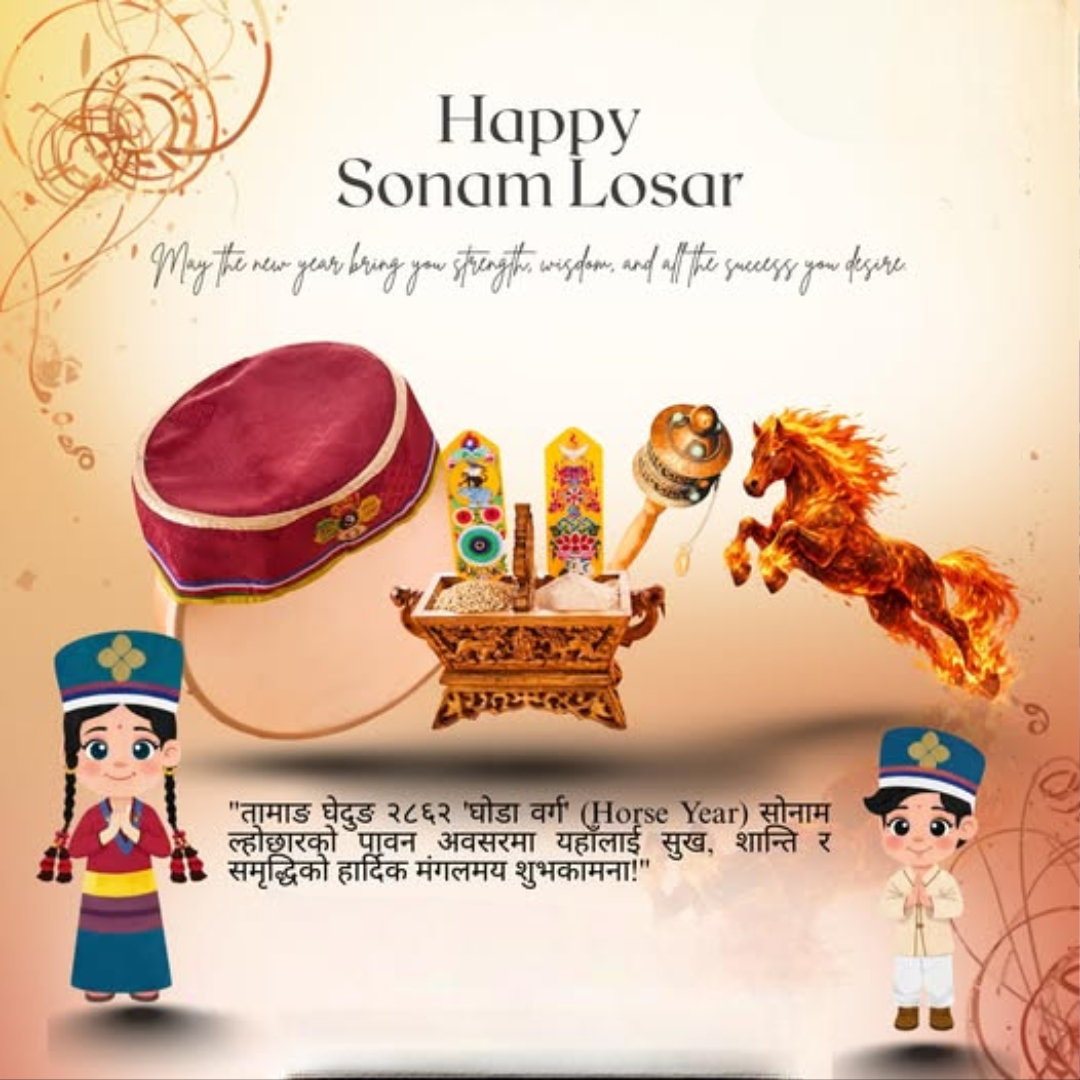
Today, the Tamang community celebrates Sonam Lhosar, one of the most important and joyful festivals of the Tamang people of Nepal and beyond. Sonam Lhosar marks the beginning of the Tibetan lunar New Year according to the Sonam calendar and is deeply rooted in Tamang history, culture, spirituality, and social life. On this auspicious day, Tamang families come together to welcome the New Year with hope, harmony, and gratitude.
The word Lhosar is derived from two Tibetan terms: “Lo” meaning year and “Sar” meaning new. Thus, Lhosar signifies the start of a new year. Among the three main Lhosar celebrations in Nepal, Sonam Lhosar is observed by the Tamang community, while Gyalpo Lhosar is celebrated by the Sherpa community and Tamu Lhosar by the Gurung community. Sonam Lhosar usually falls in late January or February, depending on the lunar calendar.
Settlement and Culture
Historically, the Tamang people are considered one of the indigenous nationalities (Adivasi Janajati) of Nepal, with a long history linked to the Himalayan region. The Tamangs have their own language, script, traditions, and social structure. Traditionally, many Tamangs lived in the hilly regions surrounding Kathmandu Valley, including districts like Rasuwa, Nuwakot, Sindhupalchok, Kavrepalanchok, Dhading, Makwanpur, and beyond. Over time, Tamang communities have also spread across Nepal and other countries, while preserving their unique cultural identity.
Sonam Lhosar is closely associated with Buddhist philosophy, especially Tibetan Buddhism. On this day, Tamangs begin the celebration by cleaning their homes, monasteries, and surroundings, symbolizing the removal of negativity and the welcoming of positivity. Early in the morning, families visit gumbas (monasteries) to offer prayers, light butter lamps, spin prayer wheels, and seek blessings from monks and elders for peace, health, and prosperity in the New Year.
Food plays an important role during Sonam Lhosar. Traditional Tamang dishes such as khapse (fried bread), sel roti, fing (homemade bread), meat items, and locally brewed beverages are prepared and shared with family members and guests. Sharing food symbolizes unity, generosity, and mutual respect within the community.
Traditional Dress
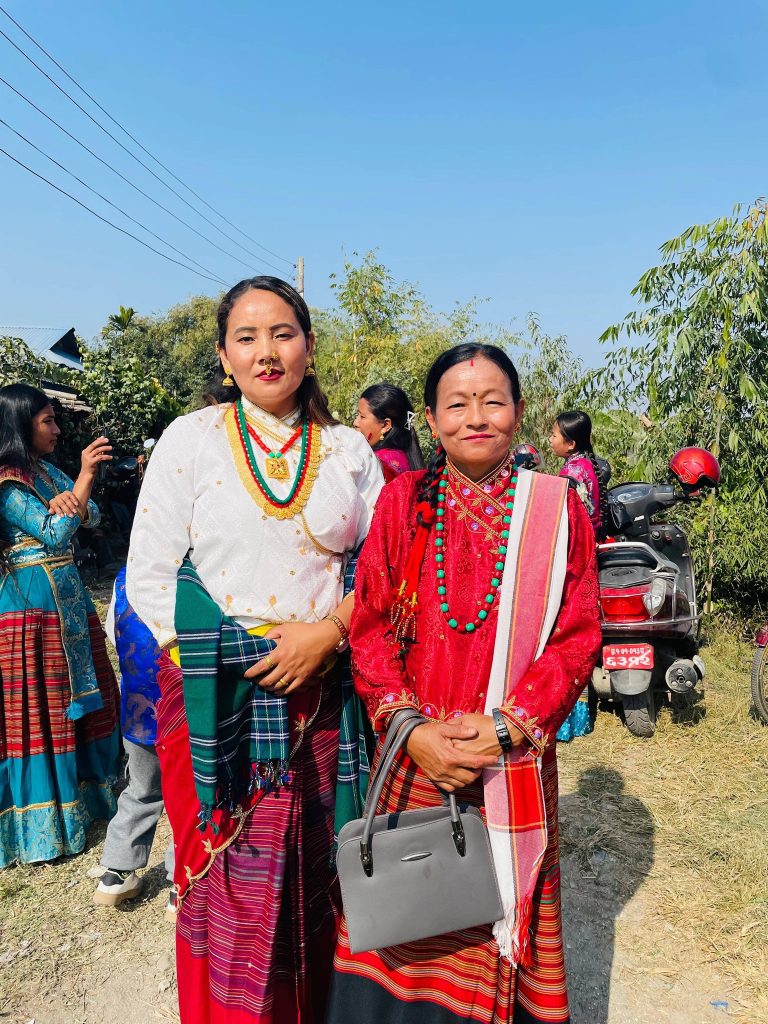
One of the most vibrant aspects of Sonam Lhosar is its cultural performances. People wear traditional Tamang dress, with women adorning colorful gunyu-cholo, ornaments, and headgear, while men wear traditional attire reflecting their heritage. Cultural programs feature traditional songs and dances such as Tamang Selo, accompanied by the rhythmic beats of the damphu, a traditional drum invented by the Tamang community. The damphu is not just a musical instrument but a powerful symbol of Tamang identity and history.
Sonam Lhosar is also a time to honor ancestors and elders. Respect for elders is a core value in Tamang society, and blessings from seniors are considered essential for a prosperous life. The festival strengthens family bonds and reinforces cultural values among the younger generation, especially at a time when modernization and migration pose challenges to cultural continuity.
Beyond celebration, Sonam Lhosar carries a message of peace, compassion, and coexistence. It reminds people to live in harmony with nature and society, reflecting the Buddhist principles deeply embedded in Tamang culture. Today, Sonam Lhosar is celebrated not only in villages but also in cities and abroad, often through large cultural gatherings, rallies, and community programs that showcase Tamang heritage with pride.
In essence, Sonam Lhosar is more than just a New Year celebration. It is a powerful expression of Tamang history, culture, resilience, and identity. As Tamangs across Nepal and the world celebrate today, Sonam Lhosar continues to unite generations and inspire cultural pride, ensuring that the rich legacy of the Tamang community lives on.
Happy Sonam Lhosar to all.